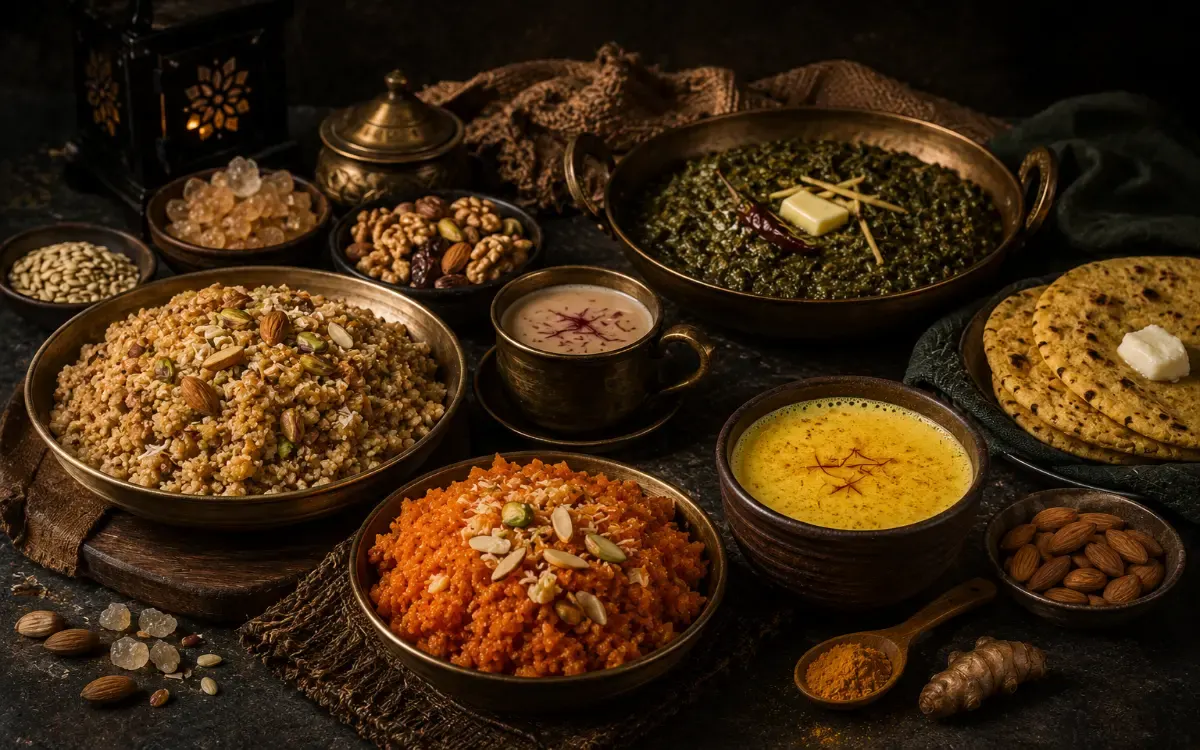
Why Pakistani Winter Cooking Changes Completely
When the temperature drops in Lahore, Islamabad and the north, Pakistani kitchens shift to an entirely different set of ingredients. Heavier fats, warming spices, more sugar, more dry fruit.
This is not arbitrary. Winter foods in the subcontinent were built around what the body needs in cold weather and what was available before refrigeration. Most of the tradition still holds up.
Panjeeri: The Classic Winter Preparation
Panjeeri is roasted wheat flour cooked in desi ghee with dry fruits, gond (edible gum), and sugar or jaggery. It is dense, keeps for weeks, and a single serving carries a lot of energy.
The basic method:
- Roast wholewheat flour in generous desi ghee on a low flame until it turns deep golden and smells nutty. This takes patience — rushing it on high heat gives you raw-tasting panjeeri.
- Fry the gond separately in ghee until it puffs up, then crush it.
- Add chopped almonds, pistachios, walnuts, melon seeds and dried coconut.
- Stir in powdered sugar or grated jaggery once the mixture has cooled slightly.
Traditionally panjeeri is given to new mothers and eaten through winter mornings. The quality of the ghee matters more here than in almost any other dish, because there is nowhere for a poor fat to hide.
Gajar ka Halwa
Winter carrots in Pakistan are sweeter and redder than the rest of the year, which is why gajar ka halwa is a seasonal dish rather than a year-round one.
Grate the carrots, cook them down slowly in full-fat milk until the milk has almost gone, then add ghee and sugar and keep stirring until the mixture pulls away from the pan. Finish with cardamom and khoya if you have it.
The common mistake is adding sugar too early, which draws water out of the carrots and leaves you with a watery halwa that never thickens properly.
Haldi Doodh and Warming Drinks
Turmeric milk is the one that gets international attention, but the Pakistani winter drink cabinet is wider than that: kashmiri chai, kahwa with cardamom and almond, ginger tea with honey.
For haldi doodh, warm the milk gently, whisk in turmeric and a pinch of black pepper, and sweeten with raw honey after taking it off the heat. Adding honey to boiling milk destroys much of what makes raw honey worth using.
Sarson ka Saag and Makai ki Roti
Mustard greens are a winter crop, and saag is the dish most associated with a Punjabi winter. Slow-cooked mustard and spinach leaves, finished with a ghee tarka of garlic and ginger, served with cornmeal roti and a spoon of white butter.
Saag takes time and cannot be rushed. The greens need long, slow cooking to lose their bitterness, and the tarka should go in at the very end.
Dry Fruits and Gond
Almonds, walnuts, dates, dried figs and gond appear across Pakistani winter cooking, usually bound together with ghee. Gond in particular is used almost exclusively in winter — it is fried until it puffs, then added to panjeeri and laddoos.
The Ingredient That Runs Through All of It
Look at that list again and one thing appears in nearly every dish: desi ghee. Panjeeri, halwa, saag tarka, laddoo, paratha.
Winter cooking leans on ghee because it tolerates the long, slow cooking these dishes need without breaking down, and because its flavour is central rather than incidental. This is the season where the difference between real bilona ghee and vanaspati is most obvious — there is nothing else in a panjeeri to disguise it.
If you are cooking any of this properly this winter, it is worth starting with ghee you actually trust.