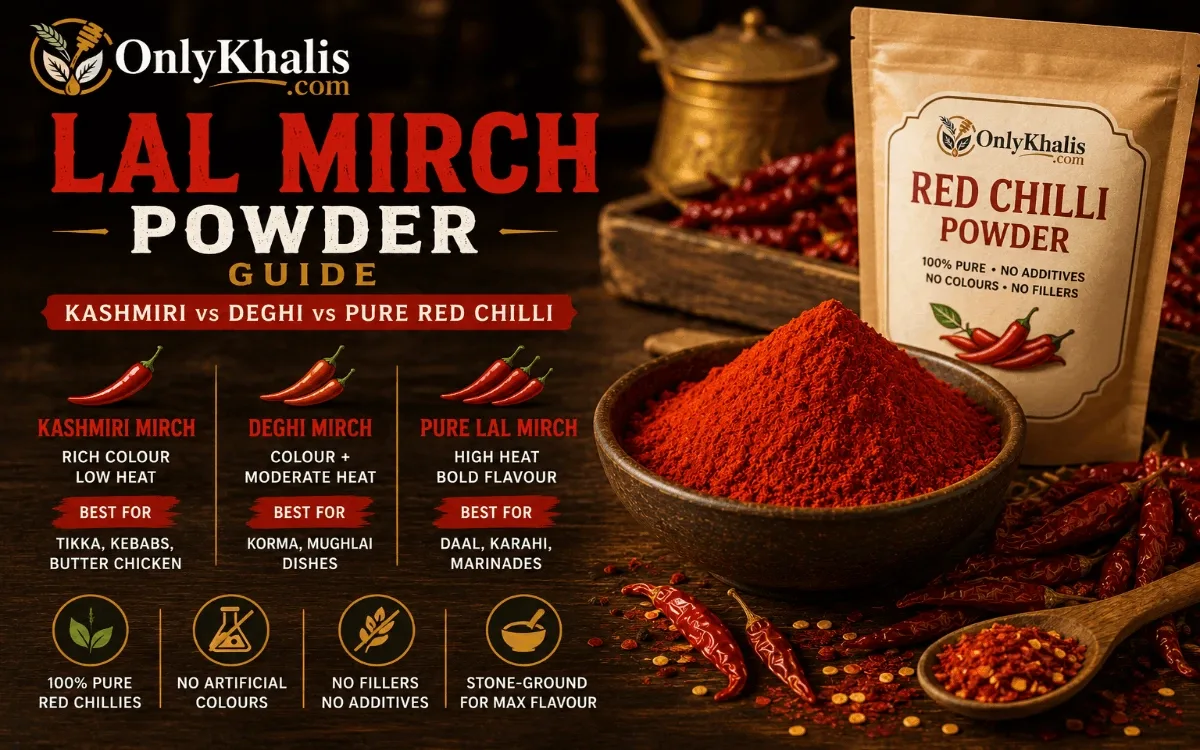
Why Red Chilli Powder Matters More Than You Think
Lal mirch — red chilli powder — is the most used spice in Pakistani cooking after salt. It goes into almost everything: karahi, biryani, nihari, qorma, daal, achaar. Most households buy the same brand out of habit without thinking about what they are actually buying.
But red chilli powder is not a single thing. There are meaningfully different types, and understanding them will genuinely change how your food tastes.
The Three Main Types of Red Chilli Powder
1. Pure Lal Mirch (Red Chilli Powder)
This is the simplest form — dried red chillies ground into powder. Pure lal mirch is about heat. The colour can range from bright red to deep brick-red depending on the variety of chilli.
Used for: Adding heat and base spice to curries, daals, and marinades.
2. Kashmiri Mirch
Kashmiri mirch comes from a specific variety of chilli grown primarily in Kashmir. The defining characteristic is colour over heat — Kashmiri mirch gives an intense, vibrant red-orange colour to dishes without making them excessively hot.
Used for: Tikka, kebabs, butter chicken, any dish where you want a deep red colour without a lot of heat.
3. Deghi Mirch
Deghi mirch is a blend — typically Kashmiri mirch mixed with a small amount of hotter red chilli. It originated in Mughal cooking and is designed to give both colour and moderate heat.
Used for: Mughlai dishes, korma, slow-cooked meat dishes, restaurant-style curries.
The Adulteration Problem With Commercial Chilli Powder
Red chilli powder is one of the most adulterated spices in Pakistan and globally. Common adulterants include:
- Brick powder or sawdust — added for bulk
- Artificial red dye (Rhodamine B, Sudan dyes) — industrial dyes banned as food additives but still found in unregulated spice products
- Cornstarch or flour — cheap fillers that dilute the spice
- Low-quality stems and seeds — ground in to increase volume
How to Check Red Chilli Powder at Home
The water test: Add a teaspoon of chilli powder to a glass of cold water. Pure chilli will settle slowly and colour the water a natural orange-red. If the colour is unnaturally bright or if you see oily dye spreading across the surface, artificial dye is likely present.
The smell test: Pure dried red chilli has a warm, complex, slightly fruity-hot smell. Adulterated powder often smells flat or has a slightly chemical note.
The heat test: Pure lal mirch should have a clean, building heat on the palate. If the heat is absent or one-dimensional, quality is low.
OnlyKhalis Red Chilli Powder
Our lal mirch powder is made from a single ingredient: sun-dried red chillies, finely ground. No artificial colour. No fillers. The colour comes entirely from the natural capsanthin in the chillies, and the heat comes from pure capsaicin. Use less of it than your commercial chilli powder — you will be surprised how much flavour is in a smaller amount when the product is pure.