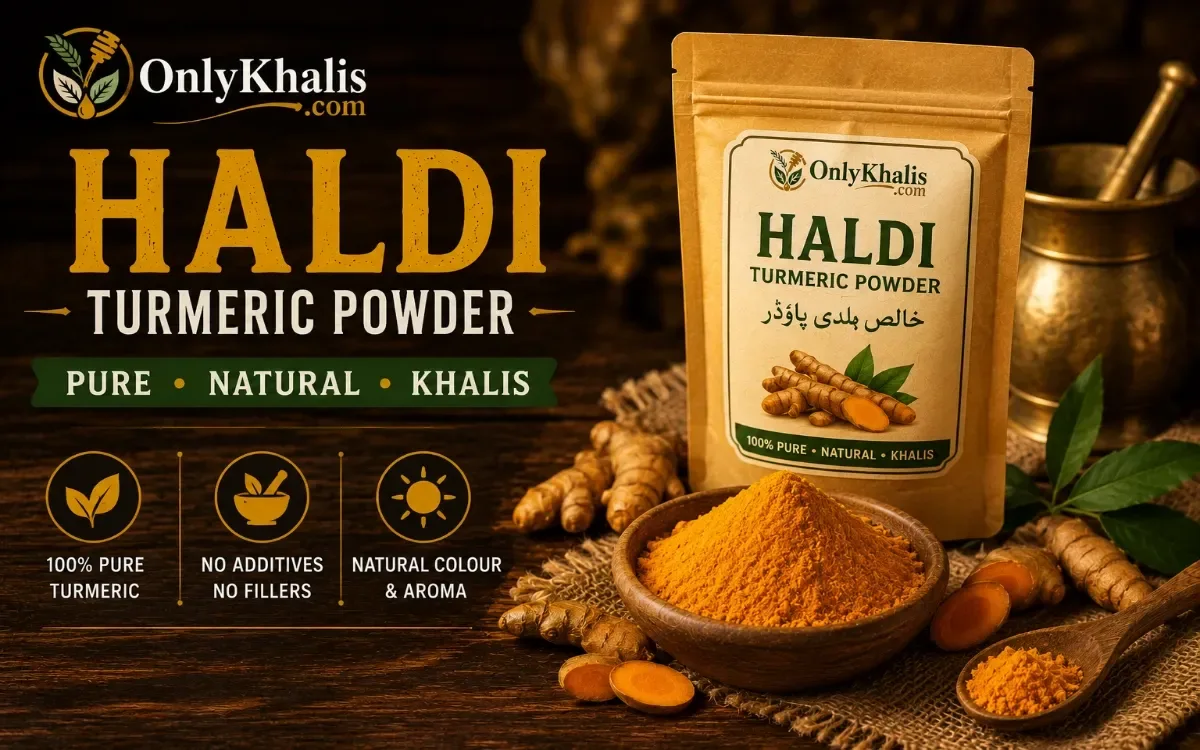
The Haldi Problem in Pakistan
Haldi — turmeric — is in almost every Pakistani kitchen. We add it to curries, daal, chai, and use it for everything from cooking to home remedies. Most of us have been using the same brand from the same supermarket for years without ever questioning what is actually inside the packet.
Studies and food safety reports across South Asia have consistently found that commercially sold haldi powder is often adulterated with chalk powder, yellow food dye, cornstarch, and in some cases lead chromate — a toxic yellow pigment used to brighten colour. Pakistan's PSQCA and various consumer protection bodies have flagged adulterated spices repeatedly.
What Real Haldi Looks Like
Colour: Pure farm-sourced turmeric has a deep, warm orange-yellow colour — not bright yellow. If your haldi is a vivid, almost neon yellow, that is almost certainly artificial dye. Real turmeric has a colour closer to saffron or a rich marigold.
Smell: Genuine haldi has a strong, earthy, slightly bitter smell with a faint peppery note. It is pungent — you know immediately when you open it. Commercial haldi powder often has a flat, faint smell because the volatile oils have been processed out or diluted.
Texture: Pure ground turmeric is slightly coarse and fibrous when rubbed between your fingers. Adulterated powder tends to feel unnaturally smooth and powdery.
Staining power: Real turmeric stains intensely and permanently. If your haldi does not stain your cutting board or fingers a deep yellow-orange, the curcumin content is low.
How OnlyKhalis Turmeric Is Processed
Our turmeric comes directly from farms in Pakistan. The process is traditional and involves no shortcuts:
- Fresh turmeric rhizomes are harvested at peak maturity
- They are boiled briefly — a traditional step that preserves the curcumin
- The rhizomes are sun-dried for several days until fully dry
- They are then stone-ground in small batches
No artificial colour. No fillers. No preservatives.
A Simple Home Test for Haldi Purity
Take a teaspoon of your haldi powder and add it to a glass of warm water. Stir it and let it sit for 5 minutes.
Pure turmeric: Settles slowly and leaves a deep, slightly translucent yellow-orange colour in the water.
Adulterated turmeric: The water may turn an unnaturally bright yellow and the powder may not settle properly if starch or chalk is present.
Why This Matters for Cooking
When you cook with pure farm-sourced haldi, you use less of it. The flavour is stronger and more complex — that characteristic earthy, slightly bitter depth that should come through in a good karhi or daal. Switch to pure haldi once and the difference in your food will be noticeable from the very first dish.