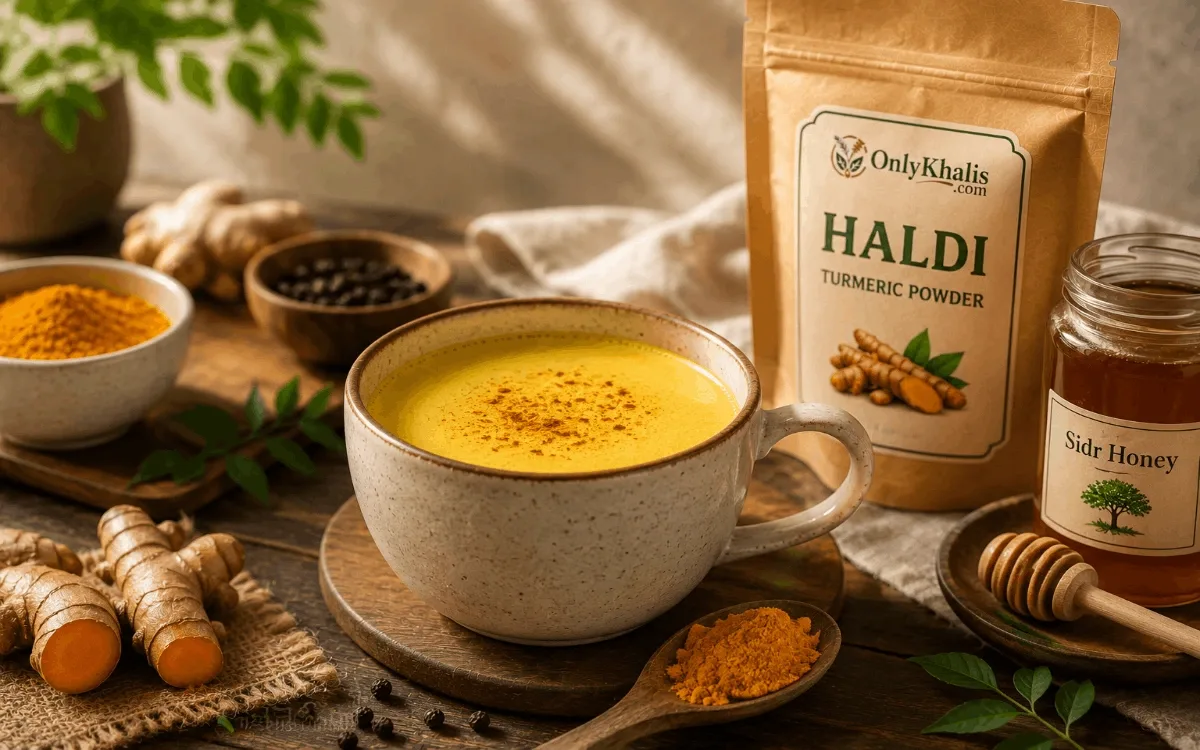
What Is Haldi Doodh?
Haldi doodh — literally turmeric milk — is one of the oldest drinks in South Asian tradition. Known internationally as golden milk, it has been made in Pakistani and Indian households for centuries as a warm, comforting drink given to children, the elderly, and anyone who is unwell.
The base is simple: warm milk, turmeric, and a few supporting spices. But the quality of the haldi makes an enormous difference. Made with pure, farm-sourced turmeric, haldi doodh has a deep golden colour, a warm earthy flavour, and a rich aroma. Made with commercial haldi powder full of fillers and artificial dye, it turns an unpleasant neon yellow and tastes flat.
What You Need
- 1 cup full-fat milk (or any milk you prefer)
- 1/2 teaspoon OnlyKhalis pure haldi powder
- 1/4 teaspoon black pepper (freshly ground if possible)
- 1/4 teaspoon cinnamon powder
- A small piece of fresh ginger (optional but recommended)
- 1 teaspoon OnlyKhalis Sidr honey (added after cooling slightly — do not add to boiling milk)
- A pinch of cardamom powder (elaichi)
How to Make Haldi Doodh
Step 1: Warm the milk
Pour the milk into a small saucepan and heat on a medium-low flame. You want the milk to be hot but not boiling. If you are using fresh ginger, grate a small amount directly into the milk now and let it warm together.
Step 2: Add the spices
When the milk is warm (not yet steaming), add the haldi powder, black pepper, cinnamon, and cardamom. Stir well with a spoon or a small whisk. The milk will turn a warm golden colour immediately if the haldi is pure. If you are using quality turmeric, the colour should be a deep, warm yellow-orange — not a bright artificial yellow.
Step 3: Simmer gently
Reduce the flame to low and let the milk simmer gently for 3 to 5 minutes. This allows the spices to infuse fully into the milk. Stir occasionally and make sure the milk does not boil — boiling can cause it to split and also destroys some of the beneficial compounds in honey if you add it too early.
Step 4: Strain and sweeten
Pour the milk through a small strainer into your cup to remove any ginger pieces or spice sediment. Let it cool for a minute or two until it is warm but not hot, then add the honey. Never add raw honey to boiling liquid — heat destroys its enzymes and beneficial properties. Sidr honey in particular is best added at a warm temperature to preserve its quality.
Step 5: Drink immediately
Haldi doodh is best drunk warm, ideally before bed. The warmth of the milk combined with the haldi and honey makes it genuinely relaxing and is traditionally given to help with sleep, sore throats, and general wellness.
Why Black Pepper Matters in This Recipe
Black pepper is not just for flavour in this recipe — it contains piperine, a compound that increases the absorption of curcumin (the active compound in turmeric) by up to 2,000%. Without black pepper, much of the curcumin passes through without being absorbed. This is why traditional haldi doodh recipes always include a pinch of kali mirch.
Variations to Try
Masala haldi doodh: Add a small pinch of nutmeg (jaifal) along with the other spices for a deeper, more warming flavour. This version is particularly good in winter.
Haldi chai: Replace half the milk with water and add a tea bag for the last two minutes of simmering. Remove the tea bag before serving. This gives you the warmth of chai with the benefits of haldi.
Cold golden milk: Make the recipe as above, let it cool completely, then pour over ice. Add a little extra honey if drinking cold. Surprisingly refreshing in summer.
Why OnlyKhalis Haldi Makes a Difference Here
The colour of your haldi doodh tells you everything about the quality of your turmeric. Pure, farm-sourced haldi produces a deep, warm golden colour — the kind you see in the photographs of traditional golden milk. Commercial haldi full of artificial dye may look bright yellow in the packet but produces a dull, flat colour in warm milk.
The taste difference is even more noticeable. Pure haldi has a warmth and earthiness that balances the milk beautifully. Diluted commercial haldi tastes of almost nothing.