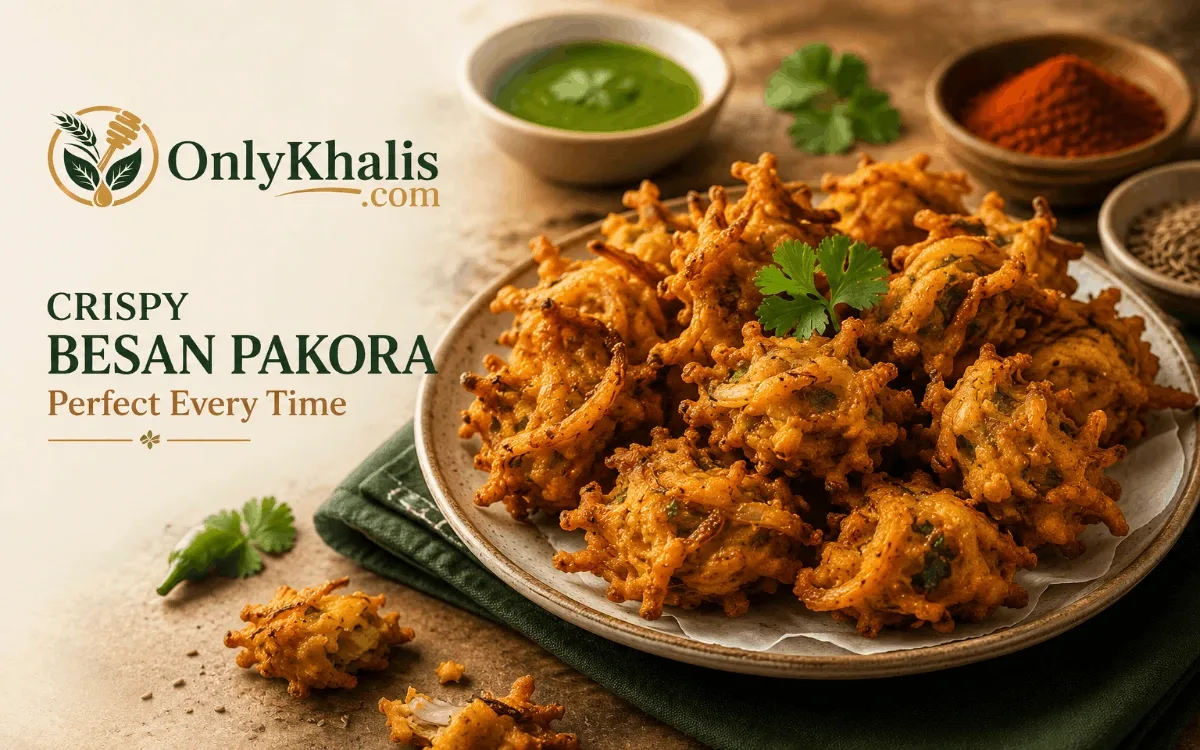
The Pakora Problem
Almost everyone has had a pakora that was crispy for the first five minutes and then turned soft and greasy. This is the most common pakora complaint and it comes down to two things: the batter consistency and the quality of the besan.
Commercial besan, being roller-milled and stripped of its natural oils, produces a batter that fries to a crisp initially but loses its texture quickly as it cools. Stone-ground besan, with its natural oils intact, produces a batter that stays crispy significantly longer — and has a noticeably nuttier, more satisfying flavour.
The Basic Pakora Batter
- 1 cup OnlyKhalis besan (gram flour)
- 1/2 teaspoon OnlyKhalis red chilli powder (lal mirch)
- 1/2 teaspoon OnlyKhalis haldi powder
- 1/2 teaspoon salt (adjust to taste)
- 1/4 teaspoon ajwain (carom seeds)
- 1/4 teaspoon cumin seeds (zeera)
- Water — added gradually (see method below)
- Oil for deep frying
Fillings — What to Put in Your Pakoras
The batter above works with almost any filling. The most popular in Pakistan:
- Pyaz pakora (onion): Thinly sliced onion is the classic — crispy, sweet, and slightly caramelised when fried
- Aloo pakora (potato): Thin slices of potato make a substantial pakora with a soft interior and crispy shell
- Palak pakora (spinach): Fresh spinach leaves dipped individually in batter — light and delicate
- Mirch pakora (green chilli): Whole green chillies stuffed with spiced besan paste, then battered and fried
- Paneer pakora: Cubes of paneer (cottage cheese) — rich and soft inside with a crispy coating
How to Make the Batter
Step 1: Combine dry ingredients
In a large bowl, combine the besan, lal mirch, haldi, salt, ajwain, and zeera. Mix together thoroughly with a spoon.
Step 2: Add water gradually — this is the critical step
Add cold water a little at a time, stirring constantly. The batter should be thick enough to coat the back of a spoon completely — if you dip a spoon in and pull it out, the batter should coat it evenly without dripping off immediately.
Do not make the batter too thin. This is the single most common mistake. Thin batter slides off the filling and absorbs more oil during frying, resulting in greasy, soggy pakoras. If your batter is too thin, add a little more besan and mix again.
Let the batter rest for 10 minutes after mixing. This allows the besan to fully hydrate and produces a better texture.
Step 3: Heat the oil
Use enough oil for deep frying — at least 3 to 4 inches deep in your karahi or pan. Heat to approximately 175°C (350°F). To test without a thermometer: drop a tiny bit of batter into the oil. It should sink slightly, then rise to the surface and begin sizzling actively within 2 seconds. If it sinks and stays down, the oil is too cold. If it immediately rises and browns within 30 seconds, the oil is too hot.
Temperature control is the second most important factor in crispy pakoras. Too cold and they absorb oil. Too hot and they brown before cooking through.
Step 4: Fry in batches
Dip your filling into the batter, making sure it is fully coated. Gently lower into the hot oil. Do not overcrowd the pan — fry 4 to 6 pieces at a time depending on the size of your pan. Overcrowding drops the oil temperature and causes soggy pakoras.
Fry for 3 to 4 minutes, turning once, until the pakoras are a deep golden brown. Remove with a slotted spoon and drain on paper towels or a rack.
Step 5: The second fry for extra crispiness (optional but excellent)
For pakoras that stay crispy longer, fry them twice. After the first fry, remove and let them rest for 2 to 3 minutes. Then return them to slightly hotter oil (185°C) for 60 to 90 seconds. This second fry drives out remaining moisture and creates a shell that stays crispy much longer.
Serving
Pakoras are best eaten immediately. Serve with imli (tamarind) chutney, green coriander-mint chutney, or simply with chai. The combination of hot pakoras and hot chai is one of the defining pleasures of Pakistani food culture — particularly on a rainy day or during Ramadan.
Why the Spice Quality Matters
In a simple batter like this, the flavour depends entirely on the quality of the spices. Pure lal mirch powder has a warmth and depth that commercial chilli powder — full of fillers and artificial colour — simply cannot produce. Pure haldi adds a beautiful golden colour to the batter and a faint earthy note that balances the heat.
Use OnlyKhalis haldi and lal mirch and you will notice the difference in the flavour and the colour of the batter from the very first batch.